What is ECMO? A simple guide for families
ECMO can sound frightening. Here is what the machine does, why doctors use it, and what to expect when someone you love is on ECMO.
If a doctor has mentioned ECMO for someone in your family, you are probably worried and have many questions. This guide explains the basics in plain language.
What does ECMO stand for?
ECMO means extracorporeal membrane oxygenation. “Extracorporeal” means outside the body, and “membrane oxygenation” means adding oxygen to the blood through an artificial lung.
What does the machine do?
ECMO temporarily does the work of the heart and/or the lungs:
- Blood is drawn out of a large vein through a tube (called a cannula).
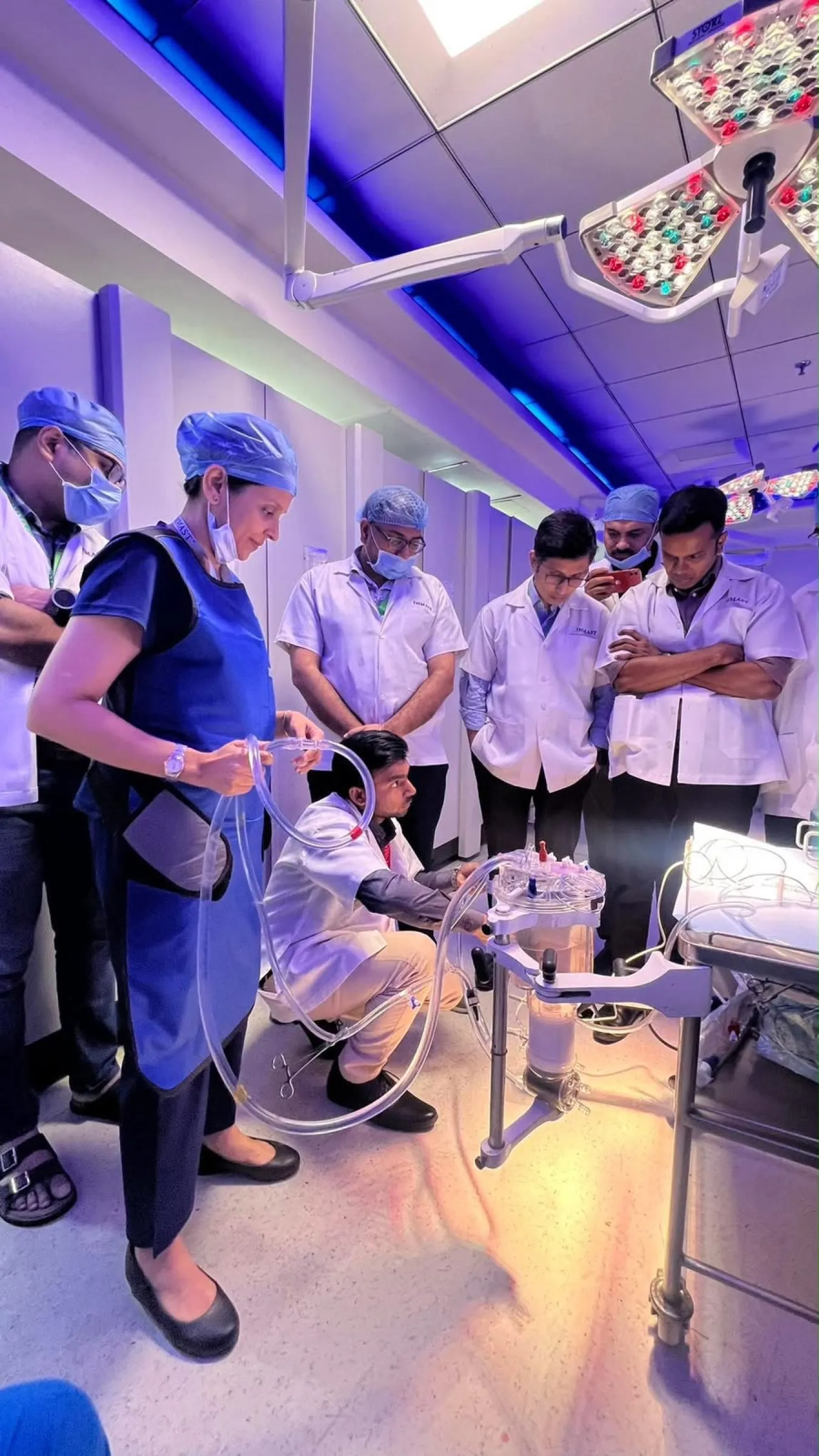
- A pump moves the blood through an oxygenator, an artificial lung that adds oxygen and removes carbon dioxide.
- The blood is warmed and returned to the body.
This gives the patient’s own heart and lungs time to rest and heal.
Why would a patient need ECMO?
ECMO is considered when the heart or lungs are failing so badly that a ventilator and medicines are no longer enough. Common situations include:
- Severe pneumonia or ARDS (acute respiratory distress syndrome)
- A large heart attack with cardiogenic shock
- Inflammation of the heart muscle (myocarditis)
- A massive clot in the lungs (pulmonary embolism)
- Cardiac arrest, in selected cases (called ECPR)
- Before or after a heart or lung transplant
Is ECMO a treatment?
ECMO does not cure the disease itself. It is support: a bridge that keeps oxygen reaching the organs while doctors treat the cause, or while a decision is made about next steps such as a transplant.
How long does a patient stay on ECMO?
It varies from a few days to several weeks, depending on the illness and how quickly the organs recover. The ECMO team reviews the patient many times a day.
What should families expect?
- Your relative will be in the ICU with a dedicated team of doctors, nurses and perfusionists.
- They will usually be sedated, though some patients can be awake on ECMO.
- There are risks, mainly bleeding, clots and infection, which the team monitors continuously.
- Ask questions. A good ECMO team will explain the goal of ECMO for your relative and how progress will be judged.
This article is for general awareness and is not medical advice. Every patient is different.
Prepared with AI assistance. For general awareness only; not medical advice.